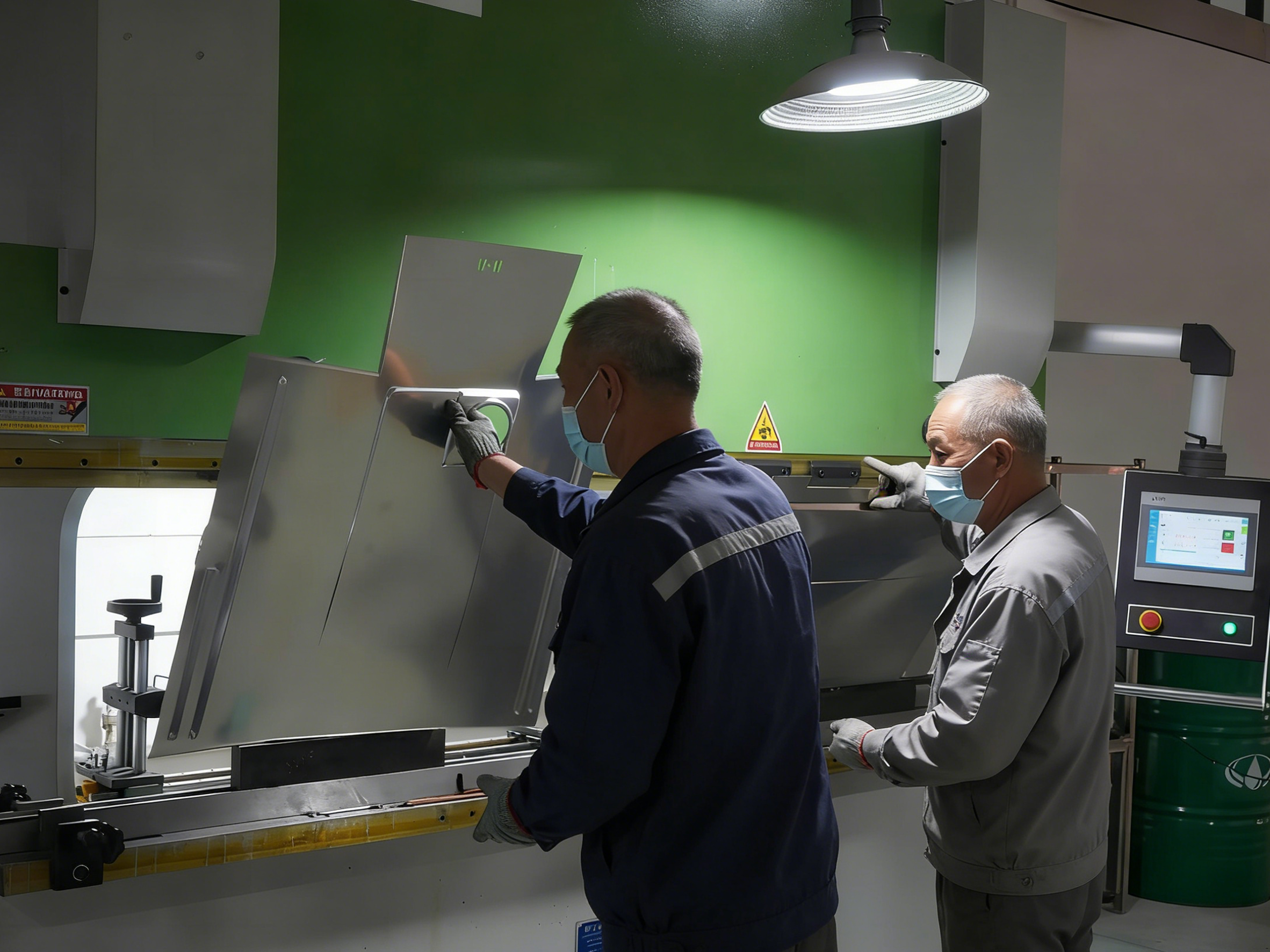
In the quiet, fire-lit corners of a metalworker’s studio, time moves differently than on a factory floor. There are no robotic arms moving in synchronized precision, no conveyor belts dictating a relentless pace. Instead, there is the steady rhythm of the hammer, the patient hiss of annealing flames, and the careful hand of a craftsman who knows that a sink cannot be rushed. The production cycle of a handmade sink is not merely a schedule—it is a narrative of transformation, where raw sheets of copper or steel evolve into functional art through a choreography of heat, force, and human judgment.
Understanding this cycle is essential for anyone who commissions a bespoke sink, whether for a heritage farmhouse renovation or a modern culinary temple. Unlike mass-produced basins that emerge from a press every ninety seconds, a single handmade sink can take weeks to complete. This is not inefficiency; it is intentionality. Let us walk through the stages of this remarkable journey, from flat metal to finished vessel.
Phase One: The Consultation and Blueprint (1-3 Days)
Before any metal is cut, the artisan engages in a dialogue with the client. Will this be an apron-front farmhouse sink with a deep, single bowl? A sleek, zero-radius undermount for a minimalist kitchen? Or perhaps a double-basin workhorse with custom drainboards? Dimensions are debated, radii are discussed, and the choice of material—copper, stainless steel, fireclay, or even brass—is settled. This phase is deceptively short on paper but carries immense weight; every decision made here ripples through the subsequent weeks.
The artisan then drafts a full-scale template, often on paper or cardboard, to visualize the sink’s footprint. For copper and steel, they calculate the exact size of the flat sheet required, accounting for the metal that will be “consumed” by the raising process—a formula that comes only from experience. For fireclay sinks, this phase involves carving a plaster model that will later become the mold. The client’s approval at this stage is a handshake that sets the entire process in motion.
Phase Two: Material Preparation and Cutting (1-2 Days)
The chosen metal sheet arrives in the workshop, often in a protective plastic film. For stainless steel, 14- or 16-gauge is preferred—thicker than the standard 18-gauge found in big-box stores, offering greater durability and acoustic deadening. Copper, with its warm, living patina, is selected in commercial-grade purity for optimal workability.
Using a hand-held plasma cutter or a specialized shear, the artisan cuts the blank to size. This is not a simple rectangle; allowances are made for the depth of the bowl, the width of the flange, and the curves that will emerge. Edges are deburred and smoothed. In this phase, any flaw in measurement is fatal—a mis-cut sheet cannot be patched. The precision demanded here is surgical.
Phase Three: The Art of Raising – Shaping the Bowl (5-10 Days)
This is the heart of the production cycle, where the flat sheet begins its three-dimensional transformation. For copper and stainless steel, the primary technique is raising—a process that involves repeatedly hammering the metal over a stake or anvil while rotating it continuously. Each strike compresses the metal at the bottom and stretches it at the sides, gradually deepening the bowl without thinning the corners.
This is painstaking work. A single deep basin may require thousands of hammer blows over several days. The artisan must constantly anneal the metal—heating it with a torch until it glows a dull red, then quenching it in water or allowing it to cool slowly. Annealing softens the metal, preventing it from work-hardening and cracking. The craftsman listens to the ring of the hammer; a dull thud indicates stress, while a clear ping signals that the metal is responding well.
For fireclay sinks, this phase is entirely different. Instead of hammering, the artisan pours liquid clay slurry into a plaster mold. It is left to set for several hours, then the excess is poured out, leaving a shell of clay against the mold walls. This process is repeated multiple times to build up thickness. The clay must then dry for up to 60 hours in a climate-controlled room to prevent warping—a slow, watchful waiting period.
Phase Four: Welding and Assembly (3-5 Days)
Once the bowl is raised to its final depth, the artisan turns to the sink’s structure. For under-mount sinks, a flat flange is welded around the top rim. For farmhouse styles, the front apron is fabricated separately and joined to the bowl. This is where TIG welding (Tungsten Inert Gas) shines—a process that uses a non-consumable tungsten electrode to produce a clean, precise weld with minimal spatter.
The corners, where the bowl meets the flange, are the most vulnerable. The artisan may use solder to reinforce these joints, blending the filler metal so seamlessly that the weld becomes invisible after grinding. For copper sinks, the solder is often a lead-free alloy that matches the patina of the copper over time. The back of the sink is then fitted with sound-deadening pads—a layer of rubber or cork that absorbs vibration and reduces the clatter of dishes—a feature often absent in cheaper factory models.
Phase Five: The Surface – Grinding, Polishing, and Texturing (3-6 Days)
This phase transforms the sink from a utilitarian object into a visual masterpiece. The artisan begins with coarse grinding to level the welds and smooth the hammer marks. Then, progressively finer abrasives are used—from 80-grit to 120-grit, all the way up to 600-grit for a mirror finish—or stopped at a satin 240-grit for a brushed effect that hides water spots.
For hand-hammered finishes, the final texture is applied last. Using a ball-peen hammer, the artisan creates uniform dimples across the surface, a process that is surprisingly meditative yet physically demanding. Each dimple must be consistent in depth and spacing, yet the overall pattern remains organic—a hallmark of human touch.
For copper, the artisan may apply a forced patina using chemical solutions to accelerate the oxidation process, or they may leave the sink bright, allowing the client to watch it age naturally. For stainless steel, a passivation step is essential—an acid bath that removes free iron particles from the surface, enhancing corrosion resistance.
Phase Six: Quality Assurance and Finishing Touches (1-2 Days)
Before the sink leaves the workshop, it undergoes a rigorous inspection. The artisan checks for:
Water-tightness: The sink is filled with water and left to stand for several hours to detect any micro-leaks at the welds.
Dimensional accuracy: The bowl depth, flange width, and drain hole placement are measured against the original template.
Surface perfection: The finish is scrutinized under raking light for scratches or inconsistencies.
Any imperfections discovered at this stage are corrected—a weld re-done, a scratch polished out, or a corner re-hammered. This is the artisan’s final conversation with the piece before it is packaged.
Phase Seven: Packaging and Dispatch (1 Day)
Protecting a heavy, handcrafted sink during transit is an art in itself. The sink is wrapped in a soft cloth, then secured in a custom wooden crate or a heavy-duty cardboard box with foam inserts. The crate is labeled with handling instructions: “Fragile,” “This Side Up,” and often a discreet note to the recipient about the care and feeding of their new copper or steel companion.
The Total Cycle: A Summary
Phase Duration (Approx.)
Consultation & Design 1–3 days
Material Cutting 1–2 days
Raising / Bowl Shaping 5–10 days
Welding & Assembly 3–5 days
Grinding & Polishing 3–6 days
Quality Assurance 1–2 days
Packaging 1 day
Total (excluding shipping) 15–29 working days
In real-world terms, this translates to 3 to 6 weeks from order confirmation to dispatch, depending on the complexity of the design, the material chosen, and the artisan’s existing workload.
Why the Wait is Worth It
In an era of instant gratification, waiting weeks for a sink may seem extravagant. Yet, those who commission handmade sinks understand that this cycle is not a delay—it is a pilgrimage. Each day of the production cycle adds a layer of character that no machine can replicate. The hammer marks are not defects; they are the artisan’s signature. The slight asymmetry in the bowl is not a mistake; it is a testament to the organic nature of the work.
Moreover, this extended cycle offers a deeper form of value: a handmade sink is repairable. A dent can be hammered out decades later; a worn surface can be re-polished; a copper patina can be refreshed or stripped and allowed to redevelop. This longevity—measured in generations, not years—is the ultimate return on the patience invested during production.
So, the next time you stand before a handmade sink, tracing your fingers along its textured surface, remember the weeks of labor, the thousands of hammer strikes, the careful welds, and the patient waiting that brought it into being. It is not merely a sink; it is a chronicle of time well spent.
No responses yet