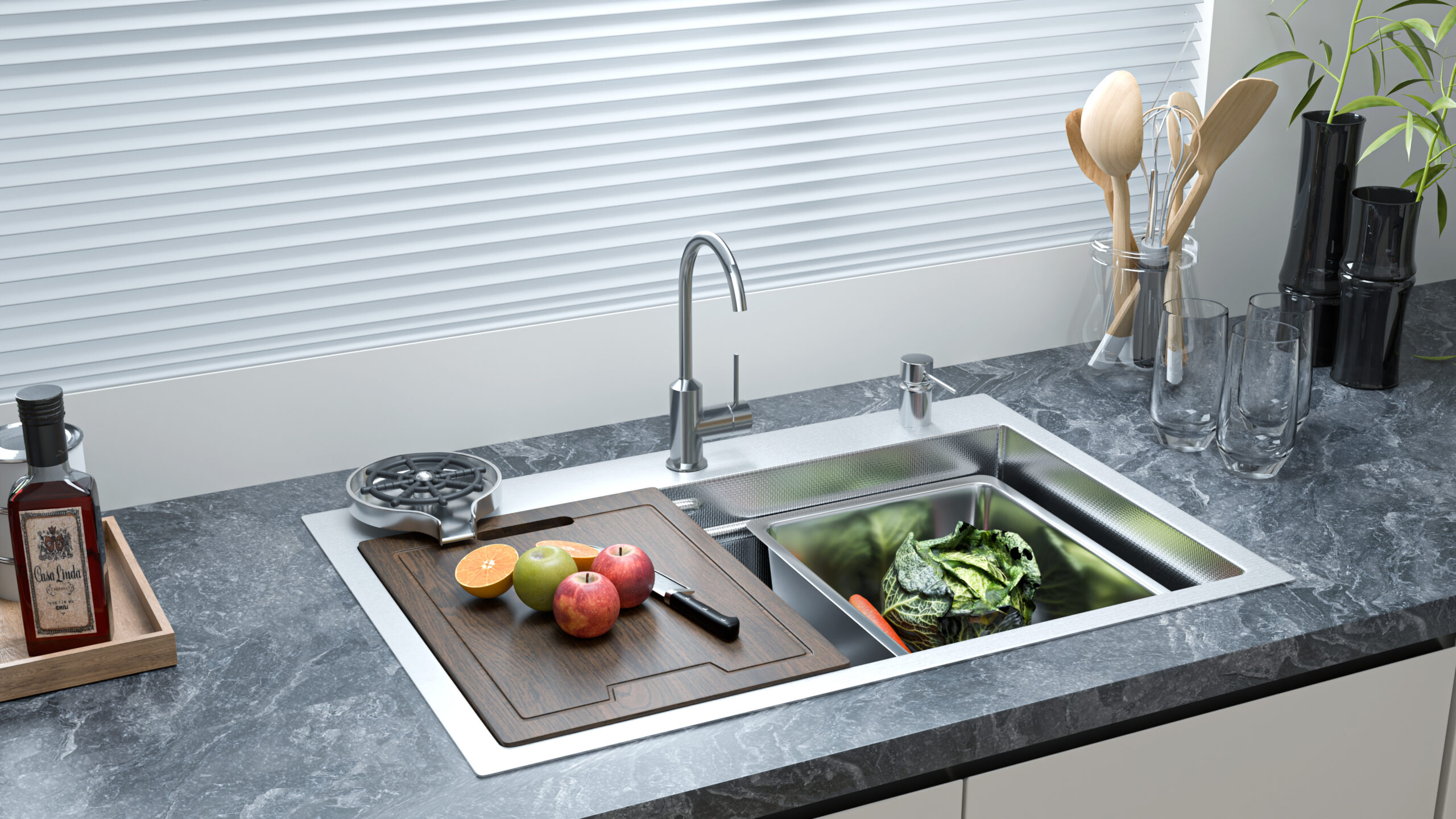
In the world of kitchen renovations, certain design choices speak louder than others. Among them, the undermount sink has quietly established itself as the gold standard for contemporary interiors. Unlike its top-mount or farmhouse counterparts, the undermount sink does not demand attention with a bold rim or an exposed front panel. Instead, it achieves its impact through restraint, offering a seamless, uninterrupted countertop that transforms the kitchen into a canvas of clean lines and uncluttered surfaces.
What Is an Undermount Sink?
As the name suggests, an undermount sink is installed beneath the countertop, with its rim securely bonded to the underside of the stone, quartz, or solid-surface material. This configuration eliminates the lip or flange that traditionally sits above the counter, allowing for a flush transition between the sink and the surrounding work surface. The result is a sleek, minimalist aesthetic that has become synonymous with modern kitchen design.
The Advantages of Going Under
The popularity of undermount sinks is not merely a matter of fashion; it is rooted in tangible, practical benefits that appeal to both professional chefs and home cooks alike.
Seamless Cleanup: Without a raised rim to trap crumbs, food particles, or moisture, cleaning the countertop becomes a swift, effortless motion. You can simply sweep debris directly into the sink with a single stroke of a sponge or towel—a small convenience that adds up to significant time savings over the years.
Unobstructed Counter Space: The absence of a visible rim creates the illusion of a larger, more expansive work surface. This is particularly valuable in smaller kitchens, where every inch of counter space matters.
Enhanced Hygiene: The seamless joint between the sink and the countertop, when properly sealed with high-quality silicone, minimizes the crevices where bacteria and mold can proliferate. This makes undermount sinks a hygienic choice for health-conscious households.
Aesthetic Versatility: Undermount sinks work harmoniously with virtually every countertop material—from natural granite and marble to engineered quartz, concrete, and even wood. The sink becomes a subtle extension of the countertop, allowing the beauty of the stone to take center stage.
Increased Sink Capacity: Without the rim taking up space on the surface, the sink bowl can be sized more generously within the same cabinet footprint. You get more usable basin depth and width without sacrificing drawer or cabinet space.
Handcrafted Undermount Sinks: Quality Beneath the Surface
While undermount sinks are widely available in mass-produced varieties, the discerning buyer often turns to handcrafted versions for superior quality and longevity. Handmade undermount sinks, typically crafted from 16-gauge or 14-gauge stainless steel (or premium copper and fireclay), offer several distinct advantages:
Thicker Material: Handcrafted sinks use heavier-gauge steel, which resists denting, reduces vibration, and dampens the clatter of dishes and cookware.
Superior Welding: Artisan welders take the time to create smooth, watertight joints at the corners, reducing the risk of leaks and rust over time.
Precise Radius: The transition between the bowl and the flat flange is carefully engineered. A well-made undermount sink features a generous radius that is easier to clean than sharp, right-angled corners.
Sound Dampening: Many handcrafted models include a layer of rubber or cork applied to the underside, significantly reducing the noise of running water and clanging pots.
The Installation Process
Installing an undermount sink is not a DIY project for the faint-hearted. It requires precision, patience, and professional expertise. The process typically involves:
Template Creation: A precise template of the sink’s perimeter is created to guide the countertop fabricator in cutting the opening.
Countertop Fabrication: The opening is cut into the stone or solid-surface material, often using water-jet or CNC technology for extreme accuracy.
Sink Preparation: The sink’s upper flange is thoroughly cleaned and primed.
Adhesive Application: A high-strength epoxy or silicone adhesive is applied to the flange.
Mounting and Clamping: The sink is lifted into position from beneath the countertop and held in place with specialized clamps or brackets while the adhesive cures.
Sealing: After the adhesive has set, a final bead of waterproof silicone is applied around the joint for an airtight, watertight seal.
Considerations Before Purchasing
While the undermount sink offers numerous benefits, it also presents a few challenges that buyers should consider:
Countertop Material Compatibility: Undermount installation is best suited for solid-surface materials such as granite, quartz, marble, or concrete. It is not recommended for laminate or tile countertops, as the edge would be exposed and vulnerable to water damage.
Cost: Undermount sinks themselves are often priced similarly to top-mount models, but the installation process—which requires precise countertop cutting and specialized mounting hardware—adds to the overall project cost.
Cabinet Reinforcement: The weight of a heavy undermount sink (particularly fireclay or cast iron models) may require additional support brackets or reinforcement within the cabinet to prevent sagging.
Edge Profile: The exposed edge of the countertop opening must be polished and sealed to prevent chipping and water absorption. This adds a step to the countertop fabrication process.
Material Choices for Undermount Sinks
Material Advantages Considerations
Stainless Steel Lightweight, affordable, durable, hygienic Can show water spots; may dent if thin gauge
Copper Natural antimicrobial, develops beautiful patina Requires regular maintenance; higher cost
Fireclay Extremely durable, classic aesthetic, easy to clean Heavy; may require cabinet reinforcement
Composite Granite Scratch-resistant, heat-resistant, wide color range Can chip or stain if harsh cleaners are used
The Undermount Sink in the Larger Kitchen Ecosystem
An undermount sink is never an island; it must harmonize with the kitchen’s broader design and functional flow. The choice of faucet is particularly important. A high-arc, pull-down or pull-out faucet complements the sink’s generous depth, allowing for easy rinsing of tall stockpots and deep roasting pans. Additionally, integrating the sink with a garbage disposal, instant hot water dispenser, or filtered water tap can elevate the sink from a simple basin to a versatile workstation.
For those who value organization, undermount sinks readily accommodate cutting boards, colanders, and roll-up drying racks that sit neatly on the sink’s rim, creating a “wet zone” that keeps the rest of the countertop dry and clutter-free.
Maintenance and Long-Term Care
A well-maintained undermount sink can last decades. Stainless steel models benefit from a simple routine of soap and water, with occasional use of specialized stainless-steel cleaner to restore shine. Copper sinks require more attentive care, including regular waxing to prevent tarnishing. Fireclay sinks are famously low-maintenance, needing only mild detergent and a soft cloth.
The silicone seal between the sink and the countertop should be inspected annually. If signs of cracking or separation appear, it should be scraped out and reapplied promptly to prevent water from seeping into the cabinet below.
The Undermount Sink vs. Other Types
Feature Undermount Top-Mount Farmhouse (Apron-Front)
Aesthetic Sleek, seamless Traditional, visible rim Bold, statement-making
Cleaning Easy debris sweep Rim traps dirt Similar to undermount
Installation Complex, professional needed Simple DIY-friendly Complex, requires cabinet modification
Cost Moderate (plus installation) Low to moderate Higher due to design and installation
Countertop Support Full support under stone Rim supports sink Similar to undermount
Conclusion
The undermount sink may not command the immediate visual attention of a gleaming farmhouse apron-front or the striking color of a copper vessel, but its quiet elegance and practical superiority have made it the default choice for discerning designers and homeowners alike. It is the silent hero of the kitchen—present, reliable, and beautifully unobtrusive.
In a world where the lines between form and function are increasingly blurred, the undermount sink stands as a testament to the power of thoughtful design. It asks nothing of us but to be used, and in return, it offers a daily experience of effortless grace. Whether you are building a new home, renovating an existing space, or simply daydreaming about your ideal kitchen, the undermount sink deserves a place at the very center of your vision—beneath the surface, where the best design often lives.
No responses yet