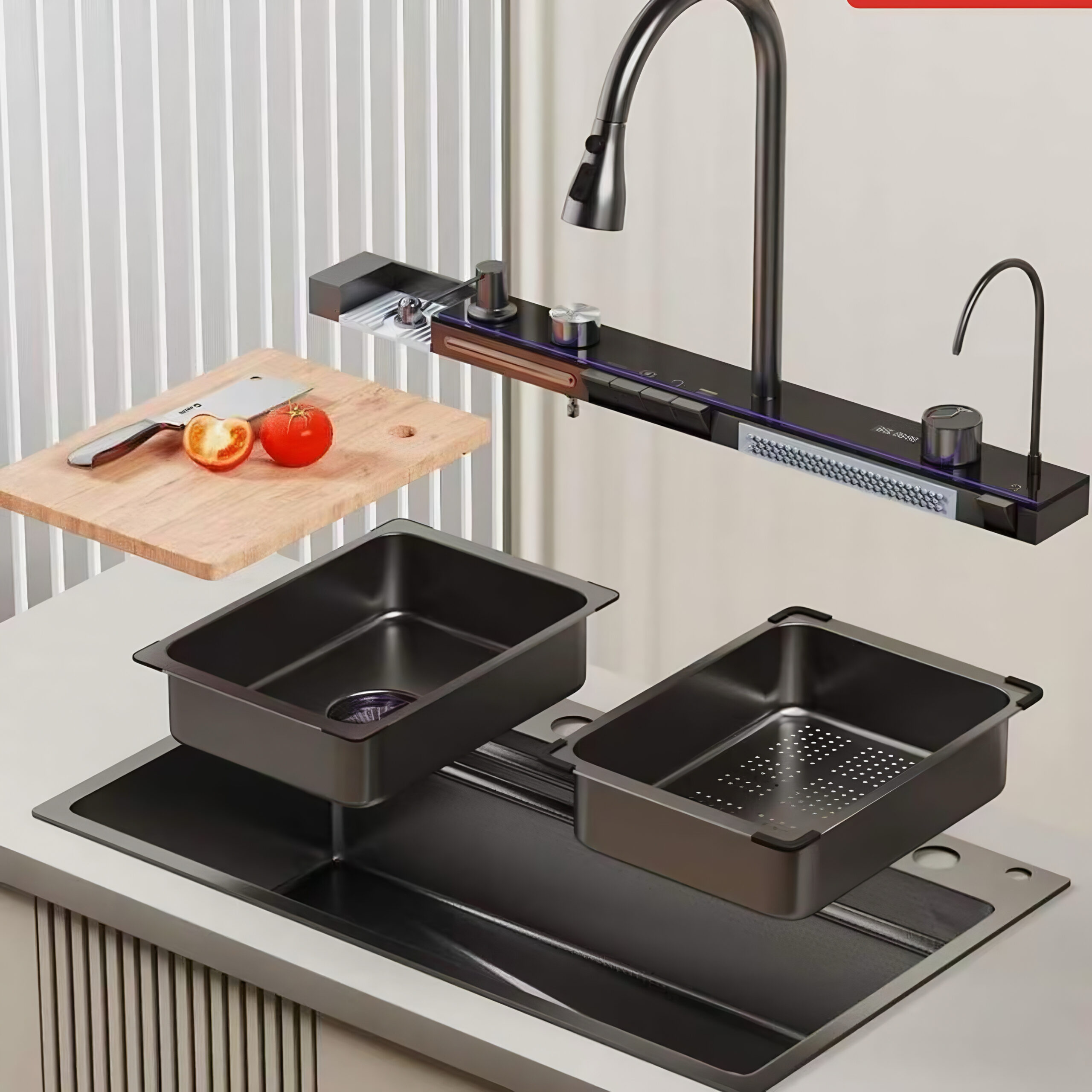
In the pursuit of the perfect kitchen sink, homeowners and designers alike often find themselves weighing the timeless appeal of natural materials against the practical demands of modern living. Enter the composite granite sink—a material innovation that bridges the gap between aesthetic beauty and uncompromising performance. Crafted from a blend of natural granite stone dust and high-quality acrylic resins, these sinks offer the look and feel of natural stone without the maintenance challenges, making them an increasingly popular choice for discerning kitchens worldwide.
The Anatomy of Composite Granite
Composite granite sinks are manufactured through a process that combines approximately 80% natural granite stone particles with 20% high-grade acrylic resin. This mixture is heated, compressed, and molded under intense pressure to create a sink that is dense, non-porous, and exceptionally durable. The result is a material that mimics the organic texture and depth of natural granite while offering superior resistance to stains, scratches, and thermal shock.
Unlike natural stone sinks, which require periodic sealing to prevent staining and water absorption, composite granite is inherently non-porous. This means that liquids, oils, and food acids cannot penetrate the surface, making it remarkably hygienic and easy to maintain. It is, in many ways, the best of both worlds—the visual warmth of stone combined with the practicality of engineered materials.
The Handmade Connection
While many composite granite sinks are produced using automated molding processes, premium versions retain a strong element of handcraftsmanship. In high-end workshops, skilled artisans are involved at multiple stages of production:
Mold Preparation: Custom molds are meticulously prepared and inspected by hand to ensure dimensional accuracy and surface perfection.
Material Mixing: The ratio of granite particles to resin is carefully calibrated, with artisans adjusting the blend to achieve the desired color depth and texture.
Surface Finishing: After the sink is demolded, it undergoes hand-sanding and polishing to achieve a smooth, even finish. Any surface imperfections are corrected manually.
Quality Inspection: Each sink is individually examined under raking light to detect micro-porosity, color inconsistencies, or structural flaws.
This blend of precision engineering and artisan oversight results in sinks that offer consistency in quality while maintaining the subtle variations that distinguish handmade products from their mass-produced counterparts.
The Color Palette
One of the most compelling aspects of composite granite sinks is the breadth of available colors. Unlike stainless steel, which is largely limited to metallic finishes, or fireclay, which typically comes in white or neutral tones, composite granite offers a rich spectrum that can complement virtually any kitchen design:
Color Family Examples Best Paired With
Earth Tones Mushroom, Sand, Beige Warm woods, cream cabinetry
Dark Hues Anthracite, Black, Charcoal White marble, light oak, modern minimalism
Cool Neutrals Grey, Slate, Silver Stainless steel, blue-grey cabinets
Warm Accents Terracotta, Coffee, Mocha Copper fixtures, warm timber
These colors are integrated throughout the material, not simply applied as a surface coating. This means that even if the sink is scratched or chipped—an unlikely occurrence given its durability—the color remains consistent, preventing unsightly white marks or underlying metal from showing through.
Exceptional Performance Characteristics
Composite granite sinks are engineered to withstand the rigors of daily kitchen use. Their performance profile is impressive across several key metrics:
1. Scratch Resistance
The hardness of the granite particles imparts exceptional scratch resistance. Unlike stainless steel, which can show fine scratches from everyday use, composite granite maintains its smooth, unblemished surface for years. It is even safe to use metal cookware and utensils directly in the sink, though a protective grid is still recommended for heavy cast iron.
2. Thermal Shock Resistance
Composite granite sinks can withstand sudden temperature changes without cracking or warping. You can pour boiling water directly into the sink or place hot pots and pans straight from the stove without concern. This thermal stability is a significant advantage over fireclay, which can be vulnerable to thermal shock if not properly manufactured.
3. Stain and Acid Resistance
The non-porous surface repels staining agents such as coffee, wine, tomato sauce, and fruit juices. Even highly acidic substances like lemon juice or vinegar, which can etch natural stone or tarnish copper, leave no mark on composite granite.
4. Sound Dampening
The dense composition of composite granite naturally absorbs sound. Water running into the sink produces a soft, muffled sound rather than the loud, metallic clatter associated with stainless steel. This contributes to a quieter, more peaceful kitchen environment.
5. Heat Resistance
Composite granite can withstand temperatures up to 280°C (536°F) without sustaining damage. This allows for direct placement of hot cookware without the need for trivets or protective mats.
Maintenance and Care
One of the greatest advantages of composite granite sinks is their ease of maintenance. Unlike copper, which requires polishing, or natural stone, which demands periodic sealing, composite granite needs nothing more than routine cleaning:
Daily Cleaning: Wash with warm water, mild dish soap, and a soft sponge or cloth.
Stubborn Stains: For dried-on food or mineral deposits, a non-abrasive cleaner or a paste of baking soda and water can be used.
Avoid Abrasives: Never use steel wool, scouring pads, or abrasive cleaners, as these can dull the finish.
Rinse and Dry: While not essential, wiping the sink dry after each use prevents the buildup of hard water spots and maintains its luster.
Design Configurations
Composite granite sinks are available in a variety of configurations to suit different kitchen layouts and user preferences:
Configuration Description Best For
Single Bowl One deep, generous basin Large cookware, busy households
Double Bowl Two basins, equal or unequal sizes Multitasking, washing and rinsing simultaneously
Undermount Installed beneath the countertop Seamless, modern aesthetics
Top-Mount Rim rests on the countertop Easy installation, retrofits
Farmhouse/Apron-Front Exposed front panel Bold design statements
Considerations Before Purchasing
While composite granite sinks offer an impressive array of benefits, there are a few factors to consider before making a purchase:
Weight: Composite granite sinks are heavy, often exceeding 20 kilograms (44 pounds). This requires reinforced cabinet support during installation.
Cost: Premium composite granite sinks are priced at a midpoint—more expensive than standard stainless steel but generally more affordable than handcrafted copper or fireclay sinks.
Chipping Risk: While the material is highly durable, a sharp impact from a heavy object can chip the surface. Unlike stainless steel, which can be dented but not chipped, a chip in composite granite is permanent, though it is unlikely to affect the sink’s functionality.
Cleaning Caution: While the sink is stain-resistant, the use of harsh chemical drain cleaners should be avoided, as they can compromise the resin binder over time.
Composite Granite vs. Natural Stone
For homeowners considering a natural stone sink, the composite alternative offers distinct advantages:
Feature Composite Granite Natural Granite
Porosity Non-porous Porous, requires sealing
Weight Heavy but manageable Extremely heavy
Color Consistency Uniform throughout Natural variations
Maintenance Minimal Requires regular sealing
Price Moderate Premium to high
Scratch Resistance Excellent Good
The Composite Granite Sink in Context
The rise of composite granite sinks reflects a broader shift in kitchen design toward materials that offer both beauty and resilience. Today’s homeowners demand fixtures that can withstand the demands of busy lifestyles while still contributing to the overall aesthetic of the space. Composite granite delivers on both fronts.
Its natural, stone-like appearance adds warmth and texture to the kitchen, complementing both traditional and contemporary styles. Its performance characteristics—scratch resistance, stain resistance, thermal stability, and sound dampening—ensure that it performs as beautifully as it looks. And its low-maintenance requirements make it an appealing choice for busy families and professional chefs alike.
Conclusion
The composite granite sink represents a thoughtful convergence of natural beauty and modern engineering. It offers the visual richness of stone without the maintenance burdens, the durability of industrial materials without the cold, impersonal feel of metal. It is a sink designed for the way we live today—fast-paced, demanding, and yet deeply appreciative of craftsmanship and design.
Whether you are renovating a family kitchen, designing a gourmet cooking space, or simply seeking a sink that will stand the test of time, the composite granite sink is a choice that deserves serious consideration. It asks little of you in return for its beauty—just a gentle wipe and a moment of appreciation for the harmony it brings to the heart of your home.
No responses yet