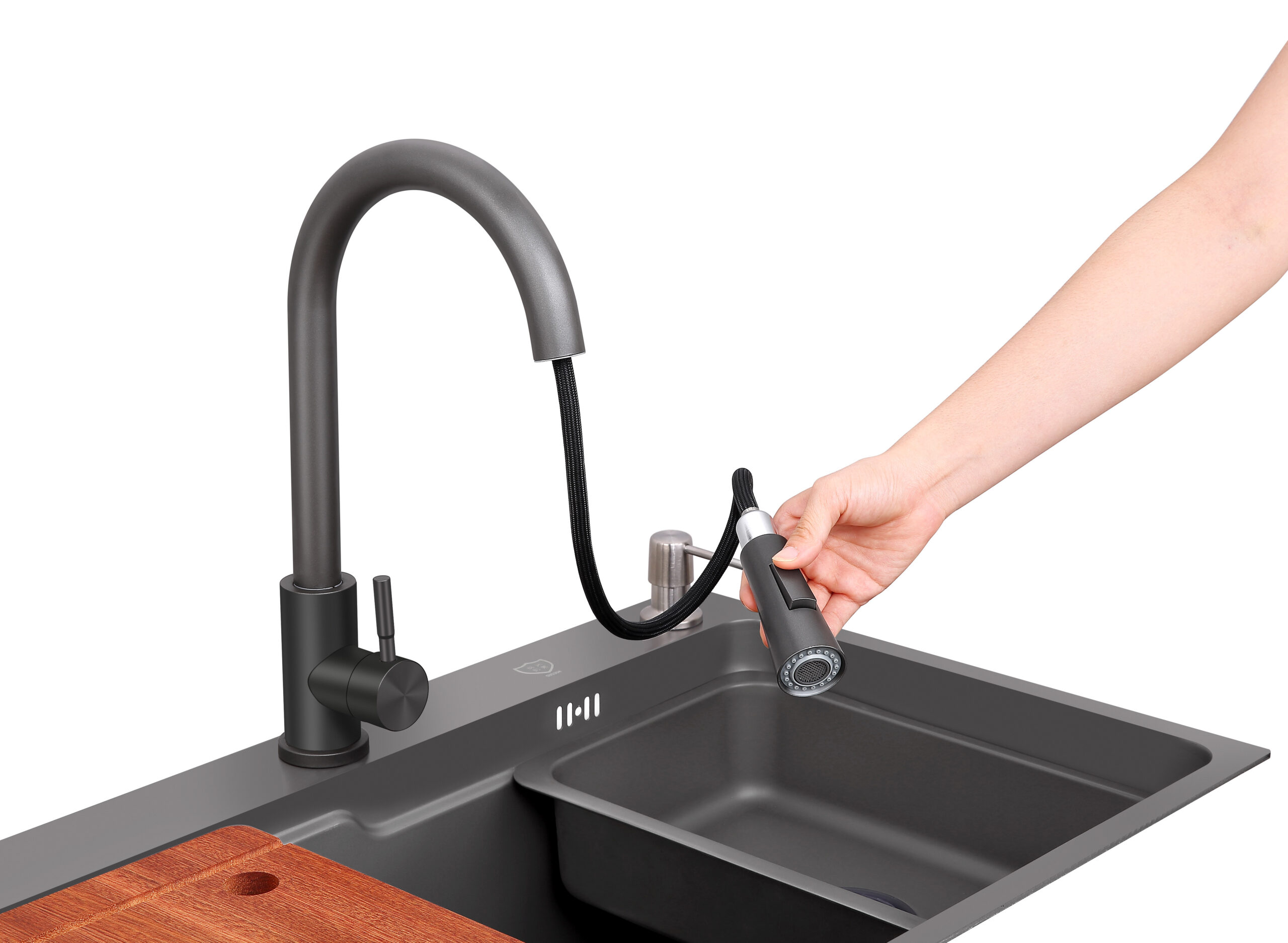
In the world of kitchen design, few elements make as immediate and powerful a visual impact as the apron-front sink. Also known as the farmhouse sink, this distinctive fixture boldly declares its presence, refusing to be hidden behind cabinet doors or countertop edges. Its exposed front panel, often crafted from gleaming fireclay, warm copper, or brushed stainless steel, becomes the anchor of the kitchen—a focal point that draws the eye and invites the hand.
Yet the apron-front sink is far more than a design statement. It is a triumph of functionality, offering an ergonomic and practical experience that standard sinks simply cannot match. To understand the apron-front sink is to appreciate a piece of design that has endured for centuries, evolving from the humble washbasins of rural farmhouses to the coveted centerpieces of contemporary luxury kitchens.
Defining the Apron-Front Sink
The defining characteristic of an apron-front sink is its exposed front face, or apron, which extends beyond the cabinetry and sits flush with or slightly proud of the surrounding countertops. This design eliminates the need for a traditional cabinet front, allowing the sink itself to become the visual and functional centerpiece of the kitchen.
The apron serves multiple purposes:
Aesthetic: It creates a dramatic visual line that breaks up the monotony of cabinetry, adding depth and character.
Ergonomic: By eliminating the gap between the countertop edge and the sink basin, the apron brings the user closer to the bowl, reducing strain on the back and shoulders.
Practical: The exposed front provides a larger, more accessible workspace, making it easier to reach the depths of the sink without leaning excessively forward.
A Brief History
The apron-front sink traces its origins to the farmhouses of 19th-century Europe and America, where large, deep basins were essential for washing bushels of vegetables, scalding chickens, and even bathing children. These early sinks were typically crafted from fireclay or cast iron, materials that could withstand the rigors of daily use and the weight of heavy cast-iron cookware.
Over time, the apron-front sink fell out of favor as kitchen design became more streamlined and cabinet-front sinks became the norm. However, in recent decades, the farmhouse sink has experienced a remarkable resurgence. Driven by a renewed appreciation for traditional craftsmanship and the desire for kitchens that feel warm, inviting, and authentic, the apron-front sink has once again taken its place as a centerpiece of residential design.
The Handcrafted Apron-Front Sink: A Masterclass in Craftsmanship
The production of an apron-front sink is among the most demanding processes in the world of kitchen fixtures. Whether crafted from fireclay, copper, or stainless steel, each sink requires a combination of precision engineering and artisanal skill.
Fireclay Apron-Front Sinks
The process begins with the creation of a plaster mold, carefully shaped to the exact dimensions of the desired sink. Liquid fireclay slip is poured into the mold, and the porous plaster absorbs moisture, building up a layer of clay against the walls. After the excess slip is drained, the clay shell is left to dry for up to 60 hours in a climate-controlled environment.
Once dry, the sink is removed from the mold and hand-finished by skilled artisans. The apron is carefully shaped, the edges are smoothed, and the surface is prepared for glazing. The sink then undergoes its first firing—the biscuit firing—at temperatures around 1000°C. After cooling, the glaze is applied by hand, ensuring even coverage across the entire surface and particularly the exposed apron. A second firing at 1180°C to 1200°C fuses the glaze to the clay, creating the signature glossy, non-porous finish.
Copper Apron-Front Sinks
Copper apron-front sinks are created through the ancient technique of raising. A flat sheet of commercial-grade copper is hammered over a stake or anvil, gradually forming a seamless bowl. The apron is fabricated separately and meticulously joined to the bowl using TIG welding or soldering.
The artisan must repeatedly anneal the copper during the process, heating it to a dull red glow and quenching it to prevent work-hardening. After the sink is formed, the surface is polished to a bright finish or treated with a chemical patina. The apron is often left with a hand-hammered texture, creating a surface that catches light in a thousand different ways.
Stainless Steel Apron-Front Sinks
Stainless steel apron-front sinks are crafted from thick-gauge 304 stainless steel, typically 14-gauge or 16-gauge. The bowl is raised through a combination of pressing and hand-finishing, while the apron is fabricated separately and precision-welded to the bowl.
The welds are ground and polished until they are virtually invisible, creating a seamless, monolithic appearance. The surface is finished with a brushed, satin, or mirrored polish, and sound-deadening material is applied to the underside to reduce noise.
The Ergonomic Advantage
One of the most compelling reasons to choose an apron-front sink is the ergonomic benefit. In a standard undermount or top-mount sink, the user must lean over the countertop edge to reach the basin. This forward posture can strain the lower back and shoulders, particularly during extended dishwashing sessions.
The apron-front sink eliminates this issue by positioning the basin closer to the user. The apron allows the user to stand closer to the sink, reducing the need to lean forward. For those who spend significant time at the sink—whether washing dishes, preparing vegetables, or cleaning up after large meals—this ergonomic advantage can make a meaningful difference in comfort and well-being.
Aesthetic Versatility
Despite its rustic origins, the apron-front sink adapts effortlessly to a wide range of design styles:
Style How the Apron-Front Sink Fits
Traditional Farmhouse Classic white fireclay apron; warm, inviting, and authentic
Modern Minimalist Clean-lined stainless steel or matte black apron; sharp, uncluttered aesthetic
Rustic/Industrial Hand-hammered copper apron; warm, organic texture; industrial edge
Transitional Neutral-toned fireclay or composite apron; bridges traditional and contemporary
Modern Farmhouse Sleek, deep apron in charcoal or black; combines old and new
The exposed apron also offers an opportunity to introduce color and texture into the kitchen. A crisp white fireclay apron against dark wood cabinetry creates a striking contrast, while a brushed copper apron against pale stone countertops adds warmth and richness.
Installation Considerations
Installing an apron-front sink is a more involved process than standard undermount or top-mount sinks, and it requires careful planning during the cabinetry design phase:
Cabinet Modification: The cabinet beneath the sink must be constructed or modified to accommodate the exposed apron. The front panel of the cabinet is typically removed or receded, and the sink is supported by a robust framework of steel brackets or a plywood platform.
Countertop Integration: The countertop must be precisely cut to fit around the sides and back of the apron. This requires accurate templating and expert stone fabrication.
Structural Support: Given the weight of fireclay or cast iron apron-front sinks—often exceeding 50 kilograms (110 pounds)—additional structural support is essential to prevent sagging or cabinet failure.
Plumbing Adjustments: The deep basin of an apron-front sink may require adjustments to the plumbing, particularly the drain pipe alignment and the garbage disposal installation.
The Accessory Ecosystem
Modern apron-front sinks have evolved beyond simple basins, integrating seamlessly with a range of accessories that enhance their functionality:
Cutting Boards: Custom-sized boards that rest on the sink’s top ledge, allowing for direct chopping with easy scrape-away of scraps.
Roll-Up Drying Racks: Flexible stainless steel racks that sit across the sink, providing a drying surface that drains directly into the basin.
Colanders and Strainers: Bowls that nest perfectly into the sink, simplifying vegetable rinsing and pasta draining.
Sink Grids: Protective stainless steel grilles that sit on the bottom of the sink, preventing scratches from heavy cookware and improving drainage.
Bottom Racks: Elevated racks that keep items off the sink floor, promoting airflow and reducing the risk of scratches.
Market Positioning and Procurement
The apron-front sink is available across a broad price spectrum, reflecting the range of materials and production methods:
Material Price Range (Approx.) Lead Time
Stainless Steel (Mass-Produced) $150 – $400 Immediate – 2 weeks
Stainless Steel (Handmade) $400 – $900 3 – 5 weeks
Fireclay (Handmade) $800 – $2,500+ 4 – 6 weeks
Copper (Handmade) $1,200 – $3,500+ 4 – 8 weeks
For bulk buyers, wholesale prices for handmade apron-front sinks begin around $250 to $600 per unit, depending on material and specifications.
Maintenance and Care
The care of an apron-front sink depends on its material:
Fireclay: Clean with mild detergent and a soft sponge. Avoid abrasive cleaners and steel wool. Rinse thoroughly and dry to prevent water spots.
Stainless Steel: Wash with warm water, mild dish soap, and a soft sponge. Rinse and dry to prevent water spots. Use specialized stainless steel cleaner to restore shine.
Copper: Wash with mild soap and a soft sponge. Allow the patina to develop naturally, or polish regularly if a bright finish is preferred. Avoid acidic cleaners.
Cast Iron: Clean with mild soap and a soft cloth. Avoid harsh chemicals that can etch the enamel. Dry thoroughly to prevent rust at any chips or cracks.
The Apron-Front Sink in the Broader Kitchen Context
The apron-front sink is never an island; it must harmonize with the kitchen’s broader design and functional flow. The choice of faucet is particularly important. A high-arc, pull-down faucet complements the sink’s generous depth, allowing for easy rinsing of tall stockpots and deep roasting pans. The integration of a garbage disposal, instant hot water dispenser, or filtered water tap can elevate the sink from a simple basin to a versatile workstation.
For designers and homeowners alike, the apron-front sink represents a deliberate design choice—a commitment to character, craftsmanship, and the belief that the kitchen should be a space of both beauty and function.
Conclusion
The apron-front sink is far more than a basin for dirty dishes. It is a declaration of intent, a testament to the enduring power of thoughtful design, and a bridge between the kitchens of the past and the homes of the future. Its exposed front panel is not merely a design feature but an invitation—an invitation to gather around the kitchen’s heart, to share in the preparation of meals, and to appreciate the beauty of a fixture that serves as faithfully as it inspires.
Whether crafted from gleaming fireclay, warm copper, or robust stainless steel, the apron-front sink carries within it the spirit of the kitchens that came before—where food was prepared with care, families gathered, and the simple act of washing was a communal ritual. To choose an apron-front sink is to embrace this legacy, to prioritize character over conformity, and to make a statement that will resonate through the life of the home for decades to come.
No responses yet